
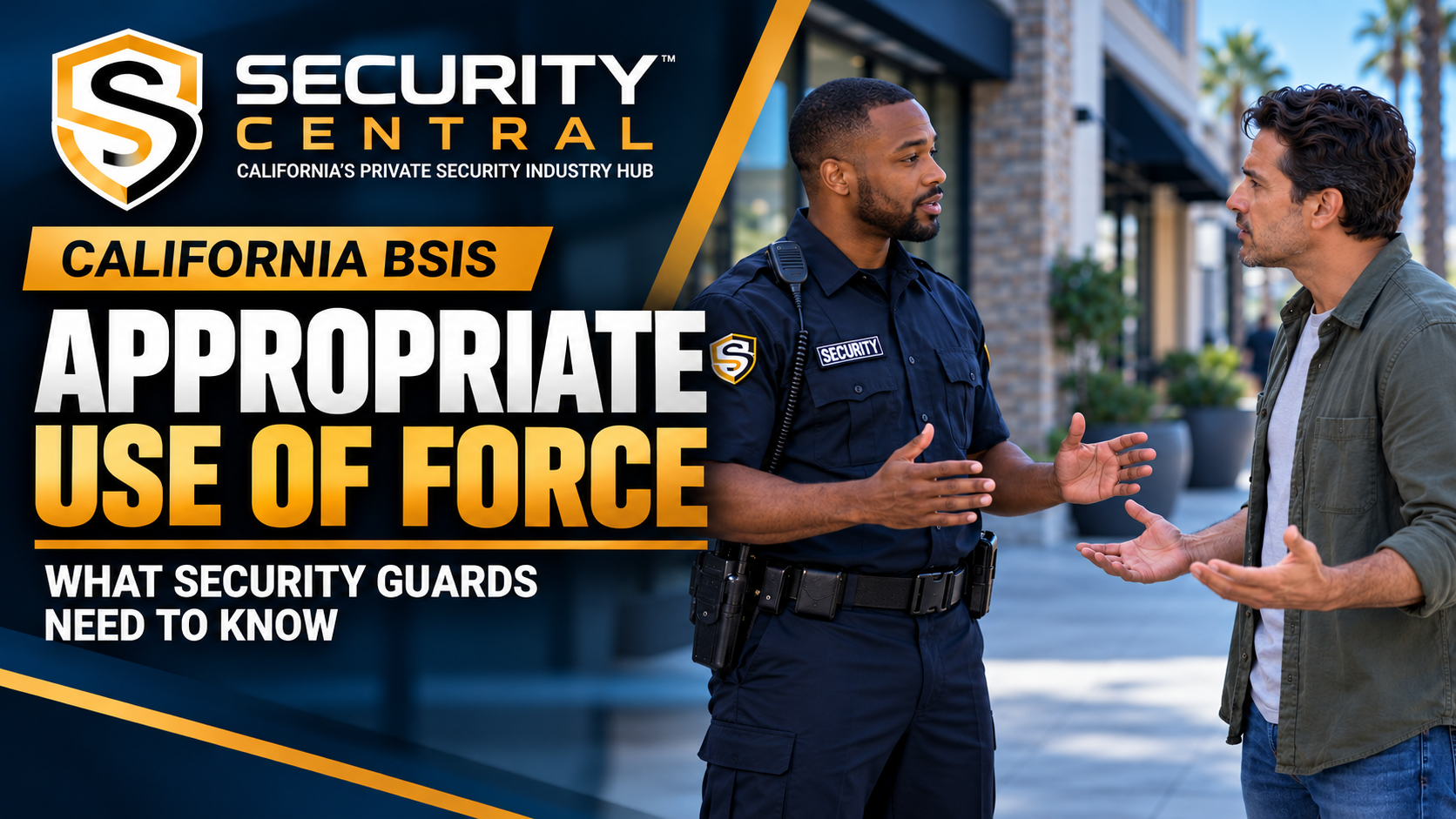
Appropriate Use of Force
Appropriate Use of Force: Judgment, Restraint, and Accountability
Appropriate use of force begins with judgment. For California security officers, protecting people and property requires recognizing danger, understanding legal authority, and choosing a response that fits the circumstances. Professional conduct can prevent an encounter from becoming a confrontation.
A uniform does not give a security officer the same authority as a peace officer. Officers must understand the limits of private person arrest, applicable law, employer policies, and post orders. A client’s request to remove someone does not automatically justify grabbing, restraining, or striking that person.
De-escalation should be part of every officer’s approach. Speak calmly, introduce yourself, explain the concern, and give clear directions. Listen without arguing. When conditions allow, use time, distance, and available cover to create safer options. Request assistance early rather than allowing frustration to drive decisions. bsis.ca.gov
Consider a shopping center encounter involving someone yelling near a storefront. Loud speech, insults, or an unpleasant attitude do not automatically establish an immediate physical threat. Assess observable behavior: Is the person approaching aggressively, threatening harm, displaying a weapon, or attempting to strike someone? Keep bystanders away and contact law enforcement when appropriate.
If force becomes legally justified, it must remain reasonable under the circumstances. Officers should consider the immediacy of the threat, the person’s actions, available alternatives, and risks to others. Force must never become punishment for disrespect. Continually reassess the situation and reduce or stop force when its justification ends. bsis.ca.gov
Recognize that confusion, delayed responses, or unusual movements may involve a disability, medical emergency, intoxication, or behavioral health crisis. Avoid making assumptions based on appearance or housing status. Use simple language, allow processing time when safe, and request medical assistance when warning signs suggest someone needs care.
Accountability continues after physical contact. Notify supervisors promptly, request emergency services when needed, and provide assistance consistent with your training and scene safety. Preserve relevant video, identify witnesses, and follow employer procedures and applicable reporting requirements. Never alter evidence or coordinate accounts to make an incident appear more favorable.
A useful report describes facts instead of conclusions. Record what you observed, what was said, the threat you perceived, efforts to resolve the encounter, and each action taken. Explain changes in behavior and why your response changed. Document injuries, medical assistance, notifications, and available evidence without speculation.
Supervisors should reinforce these habits through realistic scenarios, report reviews, and coaching. Officers need opportunities to practice communication, recognize excessive force, and understand intervention responsibilities. Equipment alone cannot replace sound decisions. bsis.ca.gov
At Security Central, professionalism means preparing officers to make defensible choices before an incident occurs. Every encounter offers a chance to demonstrate restraint, respect, and clear thinking. The strongest outcome is a situation resolved safely, with actions that can be explained honestly afterward.
