
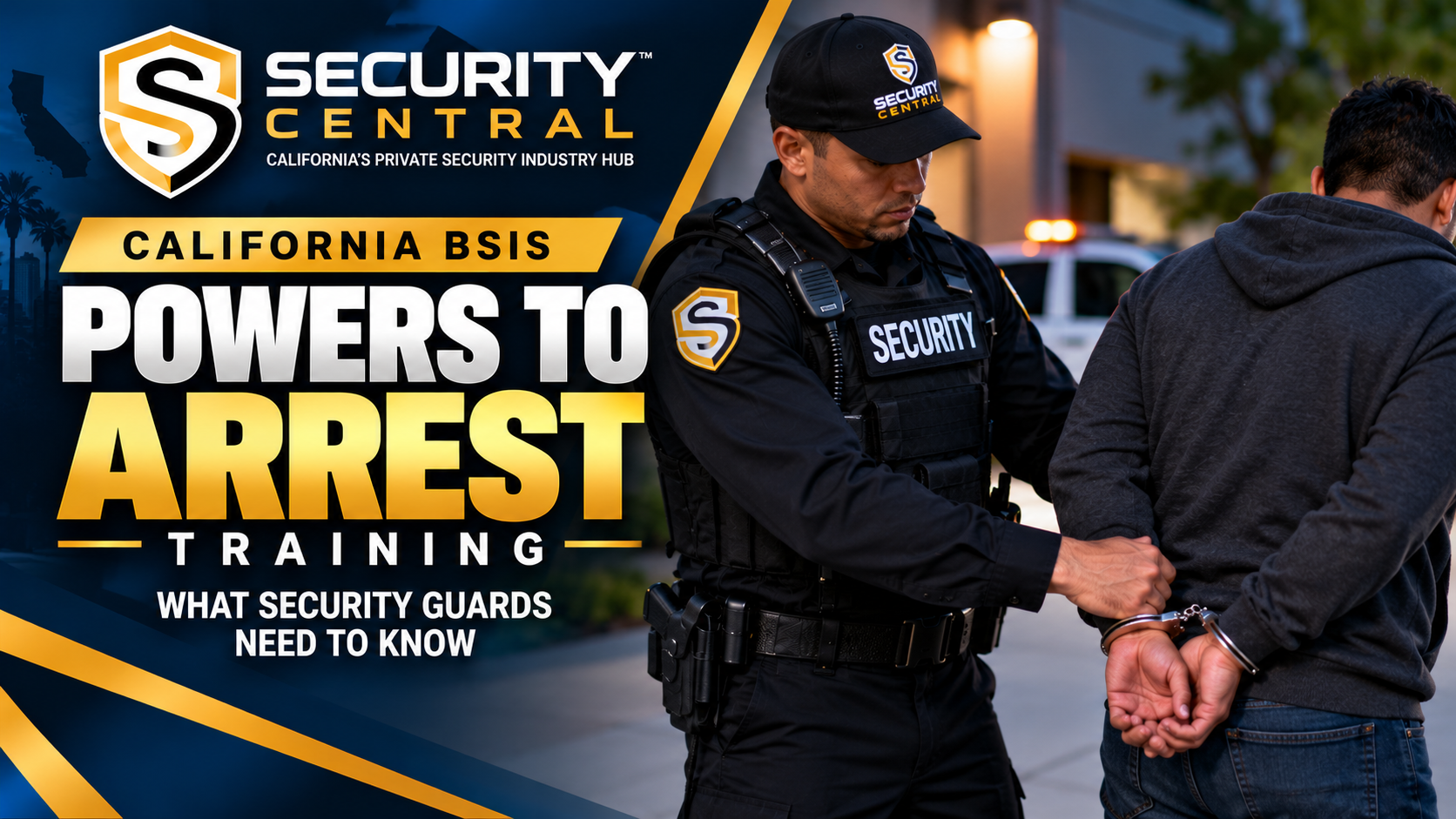
Powers to Arrest
Powers to Arrest: Understanding a California Security Officer’s Authority
Understanding the power to arrest is essential for California security officers. A guard’s primary responsibilities involve prevention, observation, reporting, and protecting people and property. A uniform, badge, or guard card does not grant the authority of a peace officer.
California Penal Code Section 837 allows a private person to make an arrest under circumstances. These include a public offense committed or attempted in that person’s presence; when the arrested person has committed a felony, even outside their presence; or when a felony actually occurred and reasonable cause supports believing the arrested person committed it. bsis.ca.gov
These distinctions matter. Suspicious behavior alone does not establish grounds for a private person’s arrest. Officers should identify the offense, distinguish facts from assumptions, and understand whether the legal conditions apply. An employer’s policy may further restrict arrests, even when the law would otherwise permit one.
Before acting, evaluate safety. Consider weapons, available assistance, customers, escape routes, and whether police can respond. Calling law enforcement, maintaining observation from a safe position, and preserving evidence may provide a safer response than attempting physical custody. Avoid letting pressure from clients or spectators control your decision.
Communication remains critical. Speak clearly, maintain professional composure, and use de-escalation whenever practical. When making an arrest, comply with applicable requirements concerning informing the person of the intention, reason, and authority for the arrest, including legally recognized exceptions. Never assume authority to arrest creates unlimited authority to search or use force. bsis.ca.gov
After a private person’s arrest, the arrested individual must be delivered to a peace officer or taken before a magistrate without unnecessary delay. Follow employer procedures, request medical assistance when needed, and preserve evidence. Documentation should explain the observed conduct, legal basis, statements, witnesses, and actions taken. oag.ca.gov
For supervisors, training should include scenarios involving trespassing, suspected theft, disturbances, and uncertain observations. Ask officers to explain what they know, what remains unclear, and why intervention is justified. Reviewing these decisions before an incident strengthens field judgment.
Security Central encourages officers to understand their authority and its limits. Professional security work depends on lawful decisions, restraint, clear reporting, and consistent respect for everyone’s safety.
